

In my previous article, I argued that Kenya has a half-a-trillion-shilling problem: we spend enormous amounts on healthcare, but mostly after people are already sick. That design flaw is destroying value for payers and employers.
But the real shock absorber in this system isn’t the insurer.
It isn’t the employer.
It’s the household.
Most Kenyan families are one serious medical incident away from the auctioneer’s hammer.
If you are a payer or an employer, that’s not just a social issue.
That’s your problem.
It shows up as absenteeism, presenteeism, rising premiums, churn, and a workforce that is constantly recovering from financial and health shocks.
Let’s unpack why.
1. The Hidden Financial Crisis Inside Your Workforce
Every year, Kenyan households spend roughly KSh 150 billion out of pocket on healthcare. This isn’t planned, neatly budgeted health spending. It’s emergency money: chama withdrawals, salary advances, high-interest loans, mobile lending apps, last-minute M-Pesa fundraisers.
Now map that onto your organization.
Those households are your employees.
When a child is admitted, a spouse needs surgery, or a parent is diagnosed with cancer, your people aren’t just emotionally stressed—they are financially exposed.
What you see on your side is subtle but very real:
- A high-performing manager suddenly distracted and less present
- A spike in absenteeism after a major health event
- Resignations that coincide with mounting medical bills
- Quiet requests for salary advances and “just one more” loan
On paper, you may be offering a solid medical cover. In practice, many employees are hitting their limits by mid-year and tumbling into out-of-pocket territory just when they need support the most.
2. For Payers: Late Care Is Eating Your Loss Ratios
From the payer’s side, the pattern is equally brutal.
Members don’t engage early. They skip screenings. They manage symptoms with over-the-counter fixes. They avoid check-ups until they have no choice. By the time they enter the system, disease is advanced and expensive.
You see it in your claims book:
- Hypertensive members who present with stroke because blood pressure went uncontrolled for years
- Pre-diabetics whose condition progressed to full diabetes with complications because no one intervened
- Employees whose stress and burnout were ignored until a mental health crisis forced hospitalization
A KSh 1,000 screening taken at the right time prevents a KSh 300,000 admission when risk is caught early. A modest intervention in someone’s late 30s can prevent a sequence of major claims in their 40s and 50s.
This is one reason loss ratios in medical lines hover in the mid-70s and why most medical insurers have posted underwriting losses for multiple years running. You’re not just paying for disease—you’re paying for delayed disease.
And the irony is, a lot of that risk is visible in your own data. You can see patterns:
- Frequent minor claims for the same condition (uncontrolled diabetes)
- Repeated ER visits instead of primary-care follow-up
- Pharmacy claims without corresponding doctor visits (self-medicating)
- Abnormal screening results with no follow-up appointments
These are small red flags that precede very big numbers. But without engagement infrastructure, you’re stuck watching the trendline until it becomes a claim.
3. The Benefits Paradox: Generous on Paper, Weak in Practice
Employers, especially large corporates, aren’t indifferent to this reality. Many have responded by enriching benefits: comprehensive medical covers, annual health checks, gym subsidies, Employee Assistance Programs, mental health hotlines.
In reports to leadership and HR presentations, it reads as a strong value proposition.
But ask a random employee what exactly they’re entitled to, which providers to use, and how to access preventive services. Most will struggle to answer.
The paradox is sharp.
Benefits are richer than ever. Awareness is low. Actual usage of preventive services is minimal. Members only fully discover their benefits when they’re at the hospital desk.
So you end up in a strange place: you’re spending more on benefits, but you’re not buying less risk. You’re buying unused potential.
And when that potential goes unused, households pay out of pocket and insurers pay catastrophic claims.
4. The Claims Concentration Problem You Can’t Ignore
If you look at your claims distribution over time, you’ll probably find something familiar from global health economics:
A small fraction of members consume a very large share of costs.
The top 10% of patients consume around 63% of healthcare spending, while the top 1% account for about 20% of all costs—a concentration pattern replicated in Kenya’s insurance data.
Here’s what matters: most of these conditions don’t explode overnight. They build quietly through missed screenings, ignored risk factors, and incomplete follow-through on care plans.
You have enough data to know who is drifting into that high-cost segment. What you don’t have is a structured way to engage them before they cross that line.
This is where the household story and your P&L collide.
When a member tips into that top 10%, two things happen at once:
- Their family steps into financial distress
- Your claims costs spike
Both are symptoms of the same root cause: no one engaged them early enough or consistently enough.
5. Engagement: The Missing Layer Between Cover and Outcome
Coverage exists. In Kenya’s corporate and group market, many employers and payers offer genuinely solid benefits.
What’s missing isn’t the benefits—it’s the activation.
Employees are “covered,” but they’re not guided.
Members are “eligible,” but they’re not prompted.
Families have “access,” but not a path.
What’s missing is an engagement layer that operates at scale and:
- Identifies rising risk early (before claims appear)
- Reaches members proactively in their language (Kiswahili, English)
- Makes action effortless (SMS booking, WhatsApp reminders, voice calls)
- Sustains behavior change over months, not days
- Closes the loop with data (did the screening happen? did HbA1c improve?)
That’s what I mean by a Health Engagement Platform.
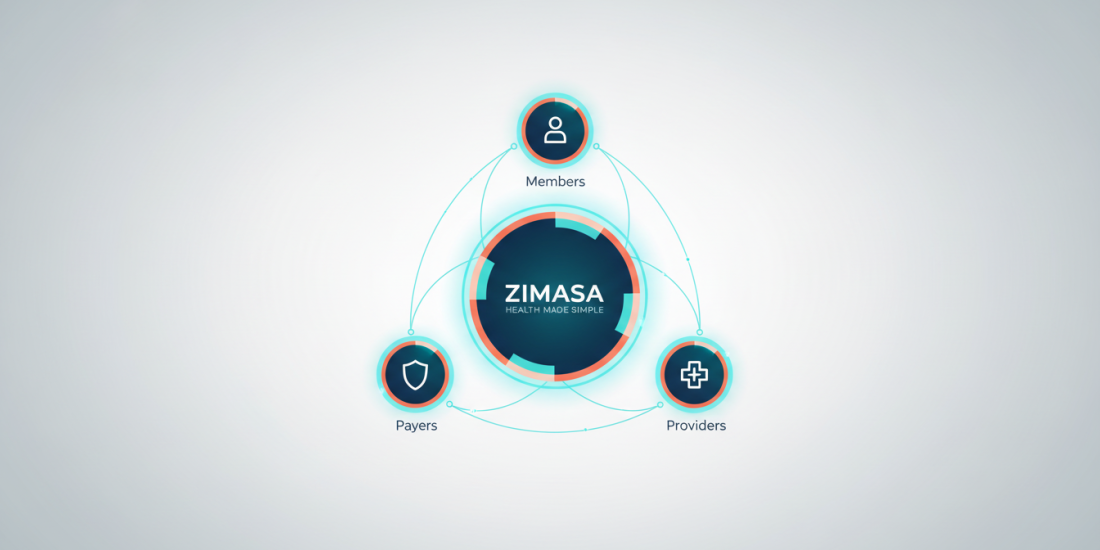
It is not another wellness initiative. It’s the operating system that sits between payers, employers, providers, and members, and makes prevention real: measurable, repeatable, and financially meaningful.
When that layer is in place, three things shift:
- You prevent more people from ever reaching high-cost status
- Your benefits spending starts to buy real risk reduction
- Households stop bearing the brunt of system failure
6. Why This Leads Directly to My Next Step
For almost three decades, I helped build systems that processed claims, managed benefits, and captured data. We made insurers more efficient at paying for sickness.
But efficiency on the wrong side of the timeline doesn’t change the story for households, or for your loss ratios, or for your wellness ROI.
At some point, the question becomes unavoidable:
What if we put the same engineering effort into preventing those claims?
In the next article, I’ll share my own “yellow card” moment—what I learned from my personal health scare, from watching my parents navigate the system, and from seeing the same patterns across 42+ insurers in 7 countries.
And I’ll explain why I’m convinced that the next decade of healthcare in Kenya (and Africa) will be defined by those who master one discipline:
Engagement that leads to outcomes.
Next in the Series:
👉 From Processing Claims to Preventing Them: My Transition
#KenyaHealthcare #HealthInsurance #CorporateWellness #FinancialResilience #HealthEngagement #InsurTech #WellnessROI #ZimasaHealth